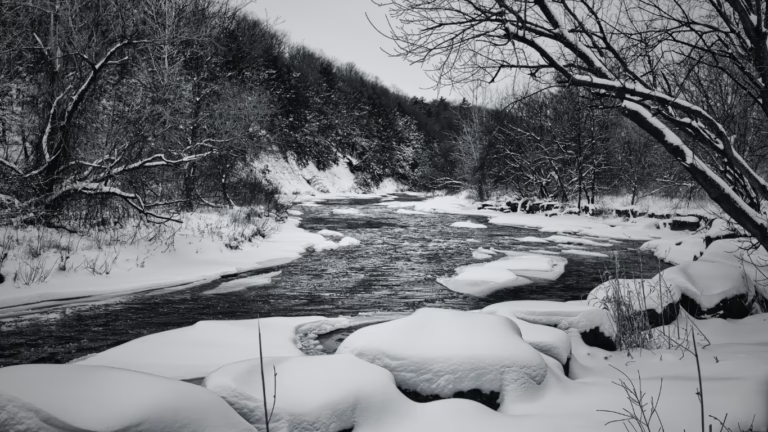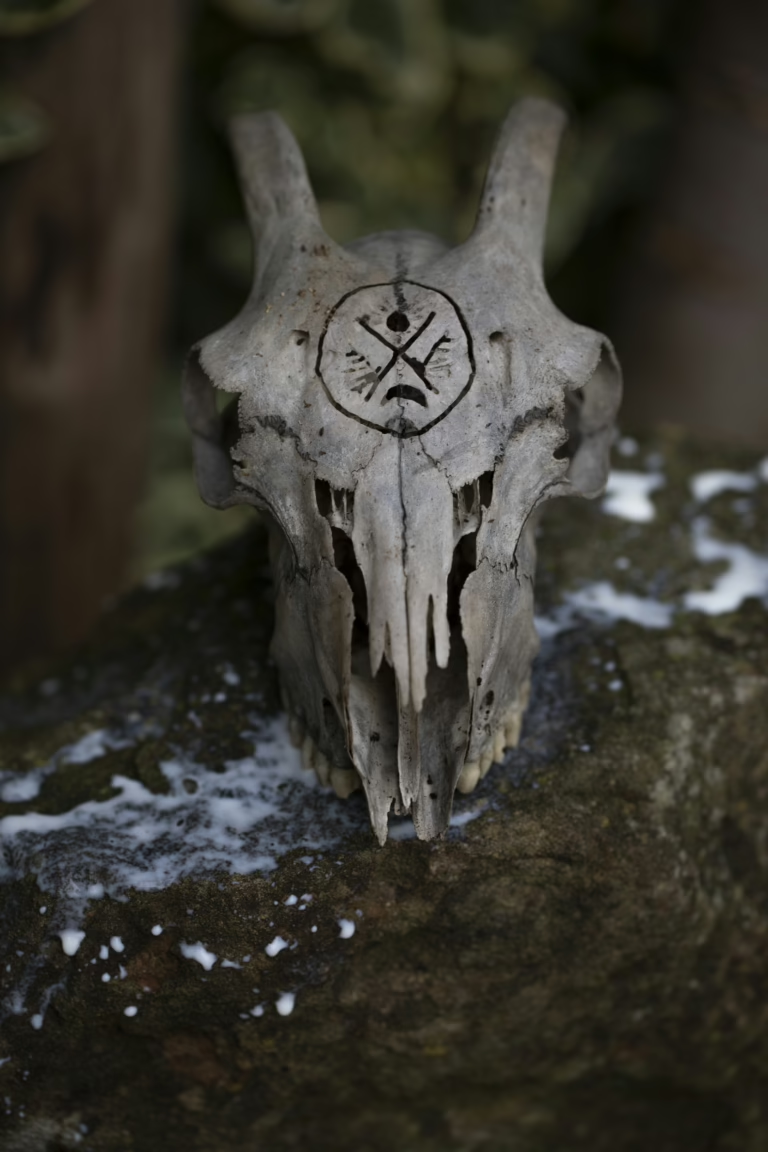


Before calendars fixed our months into neat boxes, people in Scotland watched the land, the animals, and the weather, especially our Scottish wind, to guide us to action. This relationship between person and land is something I’ve written extensively about, and i hope it provides us with new ideas about how to navigate ecology and community.
The turning of the year was not just counted in days, but in winds and other weather predictions. This was no different when looking at when to start planting seeds.
Some of the winds carried animal names. Others were tied to old beings of the land. Together, they marked the slow struggle between winter and spring. These winds are discussed at great length in the Gaelic Otherworld by Rev. John Gregorson Campbell.
The poem we are lifting the order of the winds from is talked about by Ruairidh Maclean, which he in turn took from a programme on BBC Radio Nan Gàidheal called facal Oirbh. Heres the poem in full with a translation.
Mìos Faoillich,
Naoi latha Gearrain,
Seachdain Feadaig,
Seachdain Caillich,
Latha nan Òthaisgean,
Dà latha Gobaig,
Trì Latha Sguabaig –
Suas leis an Earrach!
A month of the Faoilleach,
Nine days of the Gearran,
A week of the Feadag,
A week of the Cailleach,
A day of the Hoggs,
Two days of the Gobag,
Three days of the Sguabag –
Up with the Spring!
Here are a few of the winds remembered in Gaelic tradition mentioned above and what they mean

Originally Faoilleach was not simply January. It was a fierce period of winter weather surrounding Latha Fèill Brìghde, the old spring quarter day on 1 February.
People said:
Cuiridh am Faoilleach trì làin anns a’ chlais
“The Faoilleach puts three fillings in the furrow”
Rain. Snow and the tahtch torn off roofs. Even clam weather during this time was mistrusted
Fèath Faoillich is gaoth Iuchair, cha mhair iad fada
“January calm and July wind never last long.”
After the first Scottish wind, Faoilleach, came ..

Today Gearran simply means February in Gaelic but it was originally a wind.
Its name comes from geàrr, meaning to cut and might be related to the removal of animals’ testicles etc at this time of year to make them gelding. Its reflected in its name. The weather itself behaves like a wild Highland pony.
A gelding.
A sharp knife.
A hard wind.
Folklore tells us this Scottish wind could drive snow with such force that
“seven bolls of snow could be blown through one auger hole.”

The word means plover, but also a whistle.
For up to eight days a bitter whistling wind could sweep across the hills.
Tradition gives the wind a voice:
Is mis’ an fheadag lom, luirgneach, luath,, Marbham caora, marbham uan.
“I am the bare, swift leggy plover, I can kill both sheep and lamb.”
A wind sharp enough to remind you winter had not yet finished its work.

One of the most feared winds belonged to the Cailleach.
Not simply an old woman. In Gaelic cosmology, she is an ancient being of winter. A guardian of mountains. A keeper of deer and springs. She is a huge charcater in Scottish folk magic, tradition and belief, its unsurprising she is mentioned as part of our weather especailly near Là na Cailleach in the folk calander
When spring begins to push against winter, she strikes the ground with her slacan, her staff or mallet.
The cold wind that follows carries her name.
People remembered:
’S iomadh fear a thèid le eallaich ri seachdain chruaidh na Caillich.
“Many a man carries a load during the harsh week of the Cailleach.”
The sheep still needed to be fed. And winter was not quite finished. Spekign of sheep …

Between the winds sits a strange little pause.
Trì Latha nan Òthaisgean
“The three hogg days”
A hogg is a young sheep, and some think it might be in reference to the Paschal lamb, and its god will we get the good weather here. But we have older stories
These were said to be days borrowed from the warmth ahead, and we have a lot of stories about why this is (like in the story of Brìde and Angus)
A small breath of milder weather before winter gathers itself once more.

In some versions of the winds the Gobag or “sharp billed one” ( or dog fish interestingly) was another bitter wind.
In the rhyme, we are referencing the wind that appears near the bottom of the list. Here it lasts for two days, but in other lore it can last for up to a week.
This wind starts to calm down as we move into

Thsi wind is known as the sweeper or little besom or broom.
A wind coming just before spring here to sweep away what’s left of Winter.
This wind would be finished before Saint Patricks day (on the 17th of March). The term Sguabaig can also mean a woman who moves with sweeing gait as awlel as a broom. SO maybe the two are connected .
which then moves us into the start of spring …

All this goes to show the folk calendar wasn’t set to a fixed date or a calendar of months. The way we approached changes for horticulture, and earlier, our transhumance lifestyle was very much based on what the natural world was doing and we took the messages from them.
The idea of our Ancestral Spirits of place and land residing in the wind is also nothing new. We are part of nature, and nature is part of us.
What things happen near you when it comes to the change in season? What might your own land’s stories tell you of these markers and weather patterns? As climate change impacts us even more, these older ancestral traditions for those who keep them will also change. There’s a sadness in that for me, but also a precedent about reacting to our spaces and our worlds in accord to a deeper reason and story of place.