

There was a time when the folk of Scotland embraced the fairy rebellion figures, and viewed them as the root cause for revolution, pushing back against the empirical forces of industrialisation and apparent improvement, in Scotland, Ireland and other parts of Europe. Though since Columba’s arrival on our shores, modern-day folk have tended to view the otherworld as increasingly distant. No longer do many of us draw on our ancestry, or stories of our land, to inspire us to revolution; even fewer of us look to our ancestral spirits to encourage “fairy rebellion”.
I want to explore the idea of fairy bandits and fairy rebellion, and the people they stirred into acts of defiance against overculture and the narratives of the “elite”. In one of Scotland’s fairy origin stories, the guid folk are cast as the first rebels against God, angels who sided with Satan in an attempted overthrow and, in their defeat, were cast down to become beings of land, sea, and water. It is a telling that bears the fingerprints of the Kirk rather than the guid folk themselves, yet within it we can feel the shape of a deeper conflict taking hold.
By tracing these threads, something sharper begins to emerge. We start to see how ancestral spirits, once rooted in place and kinship, were recast as devils in the stories that followed, and how that shift did not just change belief but helped bring an older way of life to its end and ended a relationship to rebellion for the working class.

Part of this dialogue, this transformation, helps us understand why the creideamh-sìth, (the fairy faith in its simplest translation) and our animistic world views no longer are our go-to ways of relationship; instead, of what we have today, which I view in some ways as a destructive nightmare version of a world we never asked for, though I’m not blind to how much there is much to appreciate. Currently, we seem to be being led by a form of accelerationism (it’s a philosophy adopted by tech and some gov figures that says we need to accelerate towards an end which wipes the slate clean to start again. Wiping the slate clean means many humans will die, and it will be a technological first utopia following mass genocide…) toward an end which spells disaster for humans all over the world. Our traditional ways of animist relationships might hold keys to help us step out of the dystopia we find ourselves in, slow the accelerator pedal and provide an alternative future vision.
Spring is emerging across our wee island, and the calendar date for Bealtainn isn’t far away. Birch catkins hang soft and blade-like over a sea of emergent green. Birds sing their morning welcome, warning and plans. Things feel optimistic, almost normal, but it isn’t the case. I can imagine a similar view and feeling back at the turn of the 19th century, when the clearances were at their worst.
“A crofter looking out the window sees the landlord’s men coming over the Munro. Rage and questions in their heads; they are demanding to know what went on last night. The husband, locking eyes with their spouse, eyes a little wide, terrified they will be accused of breaking their so-called master’s tools and resisting the clearances. You spin a tale of the it wasn’t me; it wasn’t us; it was the guid folk, na daoine sìthe, you disturbed what is theirs, and now they are extracting the price, on you, the husband says unflinching, just like his friends told him to say.”
This is not a made-up story. The Otherworld and its de’ils provided grounds for punishment long before the clearances, and the impacts of the witch trials still sit fresh in living memory. In fact, blaming the Otherworld persisted well into the turn of the 20th century, in cases such as the Murder of Bridget Cleary in Ireland.
Yet the Otherworld has also served as an alibi for centuries. It was “God’s will. The devil made them do it. Burn the witch. It’s a holy war. Burn the heretic”—the same story, turning repeatedly, as if it has always been this way.
And still, from that same wellspring, it has inspired rebellion, through fairy figures and defiant spirits who refuse to bow. I suppose it all depends on where you stand, and where you choose to point the finger.
This idea of the otherworld helping Crofters and the working class against their landlord masters to force the landlords off the land they have seen to claim as their own has historical roots going back to at least when the “fairies” were first discussed and studied across Europe, that’s over a thousand years. I’m sure fair beyond that, too. The Aos-Sìthe were once (and still are by a few) regarded as our ancestors and kinfolk, which I discuss at great length in my book “Milldust and Dreaming Bread”.
A similar idea was picked up recently in the film “Harvest”. I think providing a poetic parallel to where we find ourselves today. If you haven’t seen it, it paints an uneasy encroachment on a community isolated but in the thrall of a landowner who is easily won back into the fold of the empire in the highlands of Scotland, abandoning the workers there. A community celebrating the harvest is beset by mysterious map makers. One of the village elders takes them from place to place in the community, explaining where each name and use of the space comes from, as the map makers make notes, village life crumbles away. The map isn’t a guide to the place but a tool for the landowners to help them know the “worth” of a place in a materialistic way. I love old maps. I have come to realise the reason we have them was to quantify and measure things so the landowners could know what they could clear and what they could graze with little mind to the people who lived there, the traditions which occurred and relied on our community and land connection to live. I also recognise the great resource old maps are as a tool of colonisation. The film ends well, as well as could be expected (no spoilers), and I suggest you check it out with these themes in mind.

The period of mass clearances in both Lowland and Highland Scotland forced changes in how land was used, how working-class people related to their community, land and sea, changed ideas of ownership to private ownership and changed and destroyed entire ways of life, It’s unsurprising, given the fracture occurring, that we find the emergence of the Otherworld figures who are tied to our land and stories of place and once central to our understanding of ourselves in our rebellion against this.
Scottish people drew, and still draw, upon stories and their guise to bring the energy of uprising to the chorus of dissent. I first stumbled upon a medieval mention of this in the book “Elf Queens and Holy Friars: Fairy Beliefs and the Medieval Church by Richards Firth Green” since then I have encountered otherworld cultural symbolism and figure heads in the resurrected Beltane festival of the 1980’s in Edinburgh Calton Hill, and in the road protest and occupation of the Rave and protest movements of the 90’s, in the communities in Caithness pushing back against the mass land ownership there, and the people of the borders who are also questioning who owns the land they live on when the energy companies come calling. More about that soon, but first, the historical precedent for our working-class fairy rebellion figures goes back a long way.
As we have already touched on, the Crofting movement used the fairy rebellion figures of the other world as frequent scapegoats for the crimes against the enclosing and clearing landlords, which still impact Scotland today in our discourse on land use and independence and our right to roam legislation and of course the crofting act. As I have referred to often, the otherworld features in the guising and mumming of Belatainn and Samhuinn. The working classes takeover rule from the landed class, entering folks’ houses uninvited, encroaching on people dressed as otherworld visitors, paying no heed to hierarchy or who was important. In fact, it was a flex against this established order, which, as a community, we carried out at least twice a year, which was a main point of this. It was a test of hospitality in one way, I guess, and an exploration of community values in another.
To have this already baked into our quarter festivals its not hard to see why the tradition stayed so alive and why it was hated on so much by land owners and the kirk throughout time (and still to this day with the Beltane festival in Edinburgh losing its funding form the council on numerous occasions as the whole thing was at times seen as civil disobedience). During these nights of rebellion, it was not uncommon to see folk dressed in the clothes of the opposite gender with disguised faces covered in soot or wearing hessian cloth bags or pillowcases on their heads. These guises, or disguises, allowed people to act with free will away from those who would recognise them. This same process and tradition were used in the spaces of insurgency and revolt in more destructive ways.
For example, the Fairesses of Kerry in Ireland went out at night dressed in the white clothes of their partners under wear with blackened out faces to hide their features and carried clubs of hazel. Here, they broke into people’s houses and “raised rabble”. This was in response to an “Investor landlord” (read as British coloniser). He had leased land which had only come on the market because of the system of quit rents. Basically, a fine was levied on Catholics to make them leave all that they had behind. These Fairesses harassed this “wanna be landowner”, beating him and his friends up and bringing lawsuits until he was driven out of the country. This same disguise and identity were used in Tipperary, where they knocked down enclosures, controlled prices, prevented the eviction of tenants, and stopped the dismissal of servants. These community-destroying “landlords” said at one point there were over 500 of these nighttime goblins who did whatever they liked, hidden as they were in the protection of their costumes and under the sanction of the community, swearing they came from the Aos-sìthe – the fairy or other world community.

A similar story was to be heard in the Pyrenees with the Demoiselles (from La Guerre des Demoiselles). For a long time, people had always gathered firewood, coppiced trees, and grazed their cattle on communal land, but in 1827, the landlord class moved in and issued a new forest code, which leased the woods into the pockets of investors and away from community use. These new investors wanted to clear-cut the forest and replant with faster-growing trees (basically the birth of forestry we have today and all that horrible Sitka everywhere). They wanted to grow these trees so they could use the fuel for a nearby Iron foundry, supplying them with the charcoal they would need for smelting. Of course, these new “investors” didn’t want the land to be used by people who didn’t own it. Unsurprisingly, the community rebelled and began a massive campaign of sabotage against this takeover of a once shared space. They decided to dress as the forest maidens, known as demoiselles, the spirits of the woods. These young ladies protected the woods from the other world, and so those capable in the village dressed like them, wearing long white gowns, white faces, wigs and scarves. They also knew the land a lot better than the new investors and their hired goons. They ran their campaign by night, breaking and sabotaging what they could and were able to go about with ease during the day out of disguise. I think this is the right response for people like those in Scotland and Europe who have monuments to kinship going back centuries all over the land these new landlords were occupying. They wanted the investors to realise the trees are the property of the community, the home of a people for centuries and not just the property of Capitalism. The French government gave in to their demands and repealed the restrictive forest code in 1831 and released the prisoner. Four years of overturning charcoal burners and attacking guards eventually paid off. Four years …. Almost a parliamentary term in today’s reckoning.

We have records of these otherworld-led rebellions going back to 1450, with accounts of leaders of a rebellion calling themselves King and Queen of the fairies and others in northern England describing themselves as Mayster Hobbe Hyrste, a northern Bogle (“Robyn Godfelaws brodyr he is”) in 1487. Robin Goodfellow is a well-known character in pagan and witchcraft circles – some attesting him to a Puca-like character. However, he is an amalgam of social uprising and poetry represented as a force for rebellion, mischief and social change sanctioned from the otherworld. His nature is attested to in the poem “The Mad Pranks and Merry Jests of Robin Goodfellow” originally printed in 1628. I think the following sums this up well:
“Robin, my only sonne and heire,
How to live take thou no care:
By nature thou hast cunning shifts
Which Ile increase with other gifts
Wish what thou witl, thou shalt it have,
And for to vex both foole and knave
Thou hast the power to change thy shape
To horse, to hig, to dog , to ape,
Transformed thus, by any meanes
Seen none thou harm st but knaves and queanes
But love thou those that honest be
And help them in necessity
Doe thus, and all the world shall know
The prankes of Robin Good-Fellow;
For by that name thou cald shalt be
To ages last posterity
If thous observe my just command
One day thou shalt see Fayry Land
This more I give: who tels thy prankes
Form those that heare them shall have thankes.”
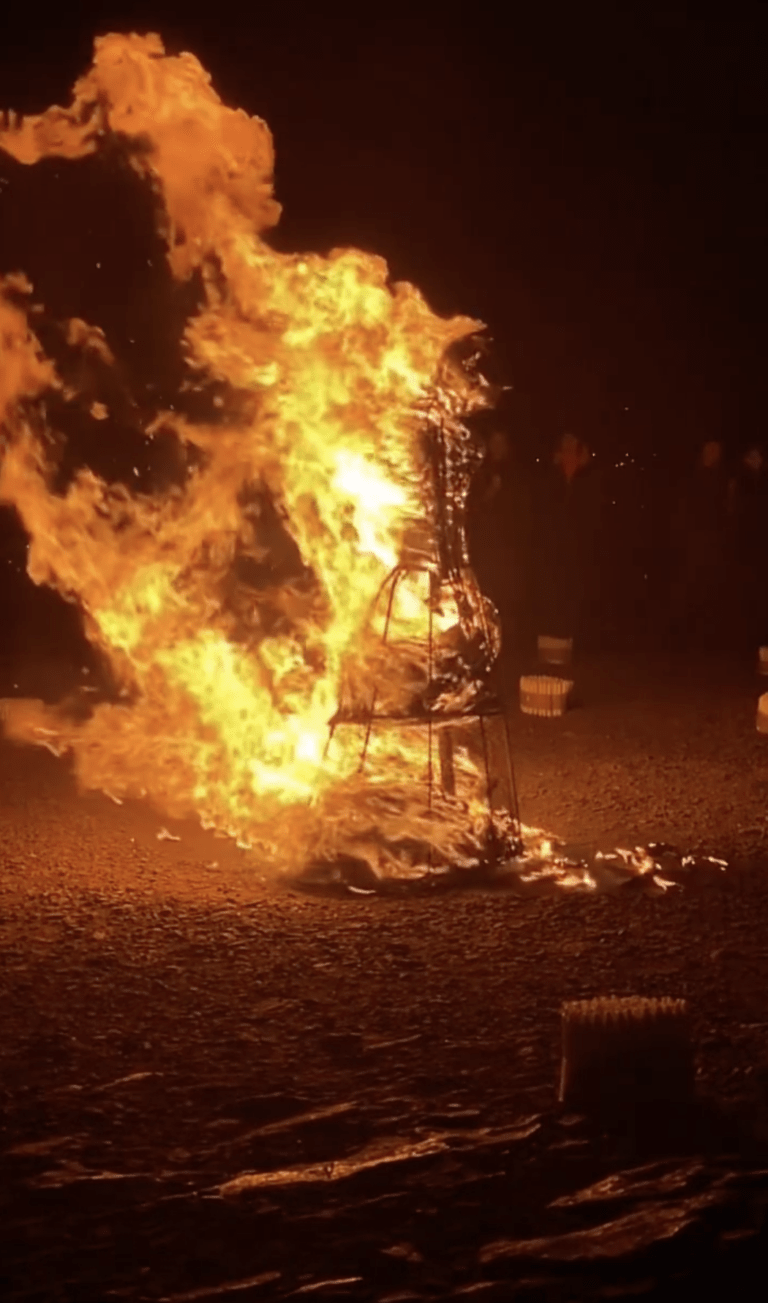
The spirit of Robin Goodfellow and others like them have never really left the collective imagination as fairy rebellion figures. As I mentioned at the beginning we have the reclaiming of the Beltane festival in Edinburgh in the 1980’s by Angus Farqhuar, John Fox, Sue Gill and others who, together in response to the defunding of the arts and community groups, Thatcher government and the impact it had on Scotland’s community (you could argue the reason we are in the situation today economically is mostly down to Margaret Thatcher’s economic policy of selling public ownership into private hands), reimagined the Beltane festival as one of rebellion and protest – the May Queen leading the charge here.
This recreated tradition, still going strong today, has historical precedent. We have old stories in Edinburgh of similar unrest around Bealtainn. When the Bealtainn celebrations had already been changed from a transhumance celebration of the summer start to more of an employment fair in the 16th century. The kirk was already taking chunks out of working-class and community-based celebrations as we ramped into the Reformation.


The following is taken from an article written in 1996 and speaks to the heritage in which the Beltane festival is held:
“However Beltane always had an underlying sense of seriousness – this was the time when cattle, crops and humans were blessed for the coming year. The old habit of jumping over the fire is a remnant of this. Back in the 16th century, the May Games had become a major spectacle, attracting people from miles around. Taking place on a Sunday near the start of May, they were centred around Calton Hill, and there were all sorts of sports and pastimes. There was a series of play-like parades and performances that involved mock battles, processions and competitions, including archery.
People took on the roles of Robin Hood, the Abbot of Unreason, the Lord of Inobedience and the May Queen herself. The players were generally picked from respected and respectable citizens who often were happy to pay a fine to avoid playing the role chosen for them. Such fines were spent on buying drinks for the revellers.
As the names of the characters indicate, the idea was to poke fun at the established order and turn things upside down for the duration of the games. By the 16th century, much of the original fertility aspect of the festival had faded. In even earlier times this had included public love-making and what amounted to virtual orgies.
By the time of the Reformation most of this had disappeared but the games were still a great way of letting off steam and having a party. This was a situation that was hardly likely to please the dour leaders of the men dedicated to carrying out the Reformation in Scotland. The problem was that the common people loved the games. It was their festival and was looked forward to with keen anticipation for months.
The leaders of the Reformation had many reasons to oppose the games. Like many fanatics through the ages, they tended to believe that those not with them were against them. This led to ridiculous situations where anything not Protestant was seen as Popish, even events like the May Games, which were descended initially from pre-Christian events. Also, the idea of giving the common horde a free licence was too much. Control was needed. They decided that the games had to be stopped.
In 1561, on 12 May, a local man, George Durie, was chosen as Lord of Inobedience and to the displeasure of the Reformers, the games went ahead. The May revellers merely ignored the city magistrates and gathered as usual. The city council and the Scottish parliament had both passed acts suppressing the games, but this made no difference to the people.
This was too much for the magistrates. They decided that an example had to be made. Accordingly, they chose a scapegoat. This was James Gillon, a shoemaker’s servant. He was arrested, tried and sentenced to be hung. He had broken the laws of the nation and the city. The fact that several thousand others had done the same thing did not seem to matter much.
The date for Gillon’s execution was fixed for 21 July. However, the magistrates hadn’t reckoned on one thing. That was the Edinburgh mob. On the day of the hanging, the provost and the bailies were trapped inside a shop by one section of the mob while others went to the City Cross and smashed up the gallows. They then went to the old Tolbooth, where Gillon was jailed. Unable to find the keys to the prison, they smashed their way in with hammers, and Gillon was set free.
By now, the provost and the bailies had fought their way clear and gathered a crowd of supporters. From three o’clock till eight in the evening, there were running battles between the two sides. Stones were thrown, shots were fired, but luckily no one was killed. Later, 13 rioters were tried and fined.
With official disapproval, the May Games started to fade away, only traditions like that of the morning service and young girls washing their faces in the May dew on Arthur’s Seat surviving.
“However Beltane always had an underlying sense of seriousness – this was the time when cattle, crops and humans were blessed for the coming year. The old habit of jumping over the fire is a remnant of this. Back in the 16th century, the May Games had become a major spectacle, attracting people from miles around. Taking place on a Sunday near the start of May, they were centred around Calton Hill, and there were all sorts of sports and pastimes. There was a series of play-like parades and performances that involved mock battles, processions and competitions, including archery.
People took on the roles of Robin Hood, the Abbot of Unreason, the Lord of Inobedience and the May Queen herself. The players were generally picked from respected and respectable citizens who often were happy to pay a fine to avoid playing the role chosen for them. Such fines were spent on buying drinks for the revellers.
As the names of the characters indicate, the idea was to poke fun at the established order and turn things upside down for the duration of the games. By the 16th century, much of the original fertility aspect of the festival had faded. In even earlier times this had included public love-making and what amounted to virtual orgies.
By the time of the Reformation most of this had disappeared but the games were still a great way of letting off steam and having a party. This was a situation that was hardly likely to please the dour leaders of the men dedicated to carrying out the Reformation in Scotland. The problem was that the common people loved the games. It was their festival and was looked forward to with keen anticipation for months.
The leaders of the Reformation had many reasons to oppose the games. Like many fanatics through the ages, they tended to believe that those not with them were against them. This led to ridiculous situations where anything not Protestant was seen as Popish, even events like the May Games, which were descended initially from pre-Christian events. Also, the idea of giving the common horde a free licence was too much. Control was needed. They decided that the games had to be stopped.
In 1561, on 12 May, a local man, George Durie, was chosen as Lord of Inobedience and to the displeasure of the Reformers, the games went ahead. The May revellers merely ignored the city magistrates and gathered as usual. The city council and the Scottish parliament had both passed acts suppressing the games, but this made no difference to the people.
This was too much for the magistrates. They decided that an example had to be made. Accordingly, they chose a scapegoat. This was James Gillon, a shoemaker’s servant. He was arrested, tried and sentenced to be hung. He had broken the laws of the nation and the city. The fact that several thousand others had done the same thing did not seem to matter much.
The date for Gillon’s execution was fixed for 21 July. However, the magistrates hadn’t reckoned on one thing. That was the Edinburgh mob. On the day of the hanging, the provost and the bailies were trapped inside a shop by one section of the mob while others went to the City Cross and smashed up the gallows. They then went to the old Tolbooth, where Gillon was jailed. Unable to find the keys to the prison, they smashed their way in with hammers, and Gillon was set free.
By now, the provost and the bailies had fought their way clear and gathered a crowd of supporters. From three o’clock till eight in the evening, there were running battles between the two sides. Stones were thrown, shots were fired, but luckily no one was killed. Later, 13 rioters were tried and fined.
With official disapproval, the May Games started to fade away, only traditions like that of the morning service and young girls washing their faces in the May dew on Arthur’s Seat surviving.
Well, that was until the 1980’s came about … You see the same energy and characters appearing in the road protests of the 1990’s, the “eco warriors” who lived in trees to prevent construction on land owned by Edinburgh University in the early 2000’s, and the battle of Beanfield against the new age travellers setting up a free festival in the 80’s, the Campaign for Nuclear Disarmament, and the Rave culture of the early 90’s. Time and time again, people associated with these direct actions affiliate themselves with the otherworld and the spirits drawn from our ancestral history. Moving forward in time, you see giant puppets as part of the COP protests called Storm, created for the 2020 Celtic Connections Festival, made from recycled and natural materials, representing a goddess of the sea alongside Extinction Rebellion, who draw on similar otherworldly ideology in the Red Rebel Brigade representing the shared blood between all people and species though less from a tradition and more a community imagination.

So how did we end up here? How did the distance become so great from a heritage of working-class rebellion against the “ruling class” to a state of complacency? I wonder if we have distanced ourselves so far from our traditional stories and our culture of direct action that we no longer really understand this heritage of rebellion. Have we been satiated enough that we become blind to the inequality? Perhaps there is little space for the emergence of otherworld voices when our anger is mostly directed through silicon and wire on social media. Anger expressed in a predetermined typeface and in turn leaving us impotent to effect change outside these online spaces, which let’s be real, are easily ignored in this strange post-truth space we are in. What is certain is that we are at a significant disconnect in many ways from each other, from community, from the land we rely on, the land which is the book of our stories and way of life and our survival.
What is the solution? Is adopting an animist relationship simply a form of degrowth, set against a backdrop of accelerating end-times, accelerationist thinking and late-stage capitalism, or does it ask for something more than that? Perhaps an eco-solarpunk future, a tide that lifts all boats? I do not know. One thing I do know is that I am not certain I have the answers to this, though I do what I can. Across Scotland, groups are working in different ways, each attempting to find an answer, like the Scottish Histories of Resistance, Grass Roots Remedies, The Sheiling Collective, Knoydart Community, the people on the Isle of Eigg, Action Against Pylons, and many more, I’ve not listed.
Personally, I’m interested in what it means to bring the otherworld, creideamh-sìth and animism into these spaces, linking us to values focused on reciprocity and hospitality for all living things as a foundation for community and direct action. When we approach it like this, who becomes our inspiration for rebellion, what story anchors this movement to something bigger than today, what legacy can we draw on to strengthen our movement and our actions, because it is these stories which carry us through, that provide a bedrock and rootedness which is harder to push back on than just a fleeting idea. It gives us an understanding of who we are, where we come from, and what we can do because our ancestors, our people, have done it before.
We must keep telling these stories.
I’m making it a priority to find these narratives. I am interested in hearing from people who are championing changes and bringing in the otherworldly-based concerns, and if this is you, I would love to connect with you about these ideas. Get in touch